Inquiry based learning is an approach that influences more student involvement in their own learning. It begins with exploration that gives the students the opportunity to ask questions. It ends with students having a deeper understanding and connection to the concepts they just learned. This type of learning is often hands on which allows students to connect their in classroom learning to real world concepts.
A teacher’s involvement in inquiry-based learning is very minimal. The teacher is the guide who provides resources and helps scaffold the students understanding of the content.
The steps of inquiry based learning are seen in the photo below:
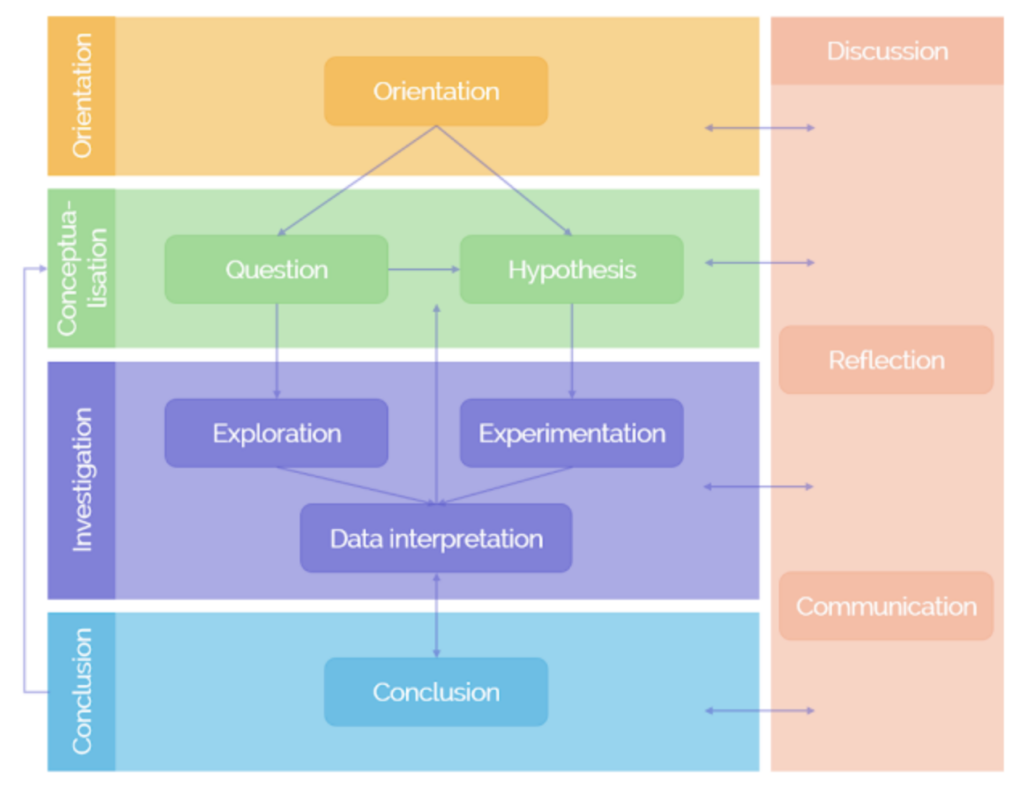
In this video, inquiry based learning is explained in a short but clear way. This video goes over how this learning style works and it provides an example of it being used in the classroom.
How does this relate to other learning?
There are four different types of inquiry-based learning: structured, open ended, problem based, and guided. Each type of inquiry based learning helps improve a variety of skills that are applicable in other areas of a students learning. Inquiry based learning improves critical thinking skills, problem solving and creativity, communication, connections, and complex understandings. This type of learning is what encourages students to want to learn and be a part of what they are learning.
How does this relate to our lesson design blueprint?
For our learning design blueprint, we focused on literacy devices and their impact in the writing of poetry! Inquiry based learning is very relevant in the process and completion of poetry. Although the poetic devices have their own purpose and meaning, it is up to the writer to identify how they want to use the device and what deeper meaning they are going to create within their writing. Poetry is a great style of writing for students to explore, ask questions and create their own meanings!
Sorry, but comments are not enabled on this site.